Sales Email Mistakes That Instantly Turn Buyers Off
Stop making your outreach about you. That’s it, end of post!
OK, I guess I should expand a little. One of the biggest mistakes BDRs and Account Executives make when speaking with buyers is making the conversation about themselves.
Seriously, take a look at the emails your team is sending—or even some of your own recent outreach. Many of the most common sales follow-ups are written more to relieve the seller’s anxiety (pressure from the boss) than to help the buyer move forward. Buyers can sense that immediately, and it quickly erodes trust.
These are the kinds of email lines that seem harmless, but to buyers they sound like background noise…or worse, like a salesperson nervously checking their pipeline dashboard every 12 minutes. If you listen closely, most of them translate to: “I need this deal to move forward.”
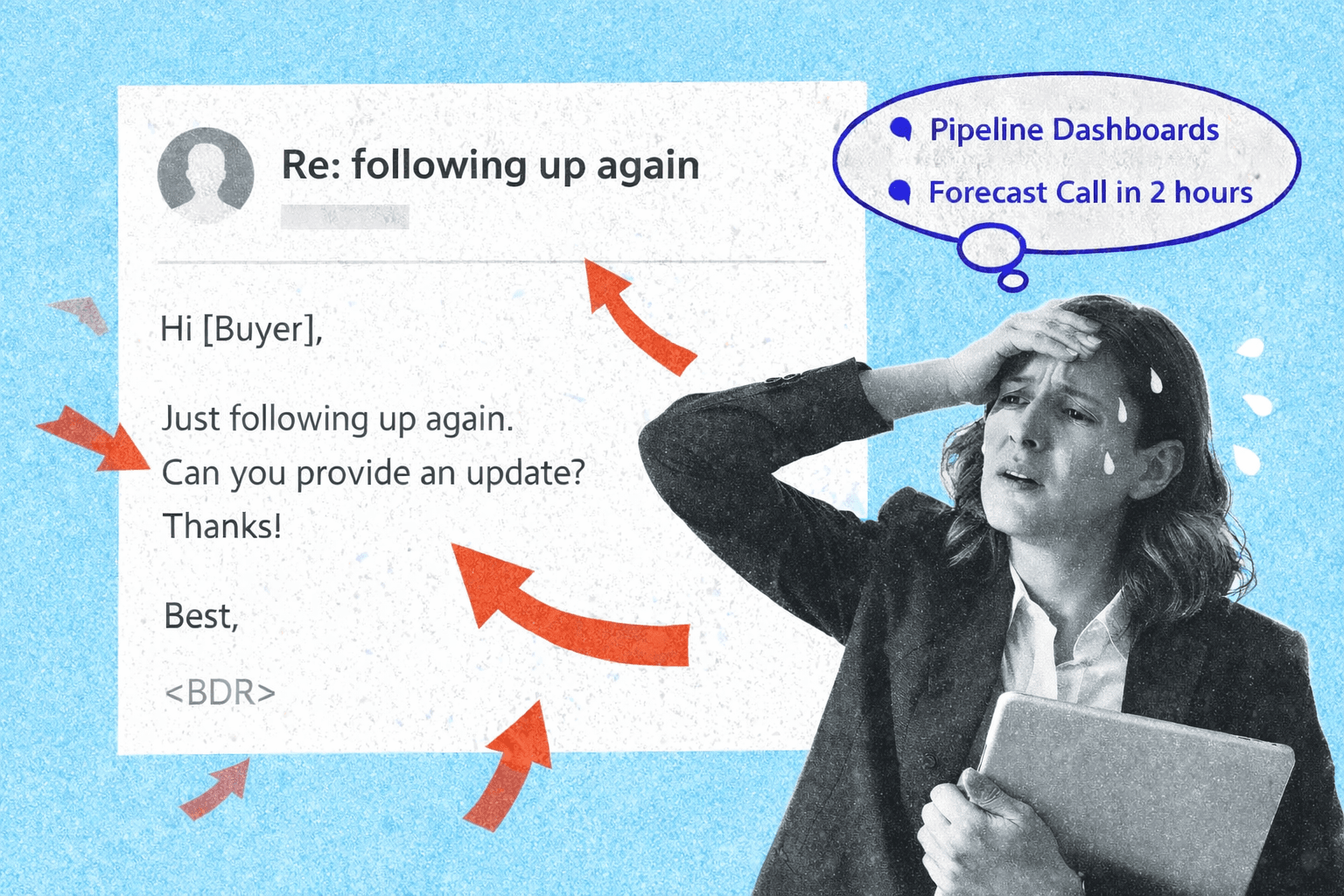
Unfortunately, buyers don’t care about your CRM anxiety, they care about their problems getting solved. Here are some email mistakes to think about:
“I wanted to follow up.”
Let’s start with the classic: “I wanted to follow up.” Newsflash—no one cares what you want! This phrase immediately signals that the email is about your task list, not the buyer’s priorities. It’s essentially the sales equivalent of saying, “My CRM reminded me you exist.” Instead, anchor your message to something the buyer actually said matters to them. For example: “I was thinking about how you mentioned wanting to cut your costs by 10%…”
Now the conversation is centered on their goal, not your reminder to send an email. Buyers engage when they feel understood, not when they feel like a checkbox on someone’s pipeline report.
“Haven’t heard from you in a while. Can you provide an update?”
This one is just as common and just as ineffective. When reps write something like “Haven’t heard from you in a while, can you provide an update?” what buyers actually hear is: "My pipeline is stressing me out, and my forecast call is tomorrow". Instead of chasing an update, reconnect the conversation to their timeline and priorities. For example: “When we last spoke, legal was reviewing things, and you were aiming for a March go-live. No rush on my end, but I remember you mentioning new hires start in March, and you wanted to be squared away before then. What’s holding things up, and where can I help?”
See the difference? You’re not just asking for an update, you’re showing you actually listened, remembered their situation, and are focused on helping them move forward… which, coincidentally, is when deals tend to move forward too.
“I’d love 30 minutes to show you our platform.”
Lines like “Can I get 20 minutes to show you a demo?” flood buyers’ inboxes every day, right alongside calendar invites they never asked for. To them, it just sounds like another rep trying to book time so they can run through a deck. Instead of asking for time to give a demo, lead with the outcome the buyer actually cares about. For example: “Worth a quick 20 minutes to see how teams like yours are building business cases that get instant budget approval?”
The difference is subtle but powerful. You’re no longer selling a demo, you’re offering a result. And buyers rarely wake up thinking, “I hope someone shows me a demo today,” but they do wake up thinking about how to solve their problems faster.
The Final Goal
There’s a pretty simple pattern behind all of this. Most sales outreach fails because it’s written to relieve the seller’s anxiety, not to help the buyer move forward.
Follow-ups, update requests, demo asks…they’re often designed to make the seller feel productive and keep the CRM happy.
But buyers don’t care about your activity metrics or the fact that your pipeline review is tomorrow morning. They care about their goals, their timelines, their problems, and their outcomes.
These suggestions might not be the perfect silver bullet, but acting as a guide for improving your email outreach even a little bit...they will push the needle in the right direction. How are you going to push the needle forward?
Let's talk about it now. Reach out to start our conversation.